High school is a critical stage in a student’s academic journey. Grades earned during these years affect college admissions, scholarships, and future opportunities. Yet many high school students in the United States struggle with time management, distractions, and ineffective study habits.
The good news is that success in high school does not depend on studying longer hours. It depends on using the right study techniques. This guide explains the most effective, research-based study strategies specifically suited for high school students in the USA.
Common Study Challenges Faced by High School Students
Before discussing solutions, it is important to understand the challenges students commonly face:
- Heavy homework load from multiple subjects
- Distractions from phones, social media, and games
- Poor time management
- Exam stress and anxiety
- Difficulty understanding complex subjects
Effective study techniques help students overcome these problems by improving focus, understanding, and retention.
1. Create a Consistent Daily Study Routine
A regular routine trains the brain to focus at specific times.
Why it matters
Studying at random times leads to procrastination and stress. A fixed routine builds discipline and reduces last-minute cramming.
How to do it
- Choose a study time after school or in the evening
- Study at the same time every weekday
- Keep sessions short and focused (60–90 minutes)
- Take weekends for light review only
Consistency is more important than studying for long hours.
2. Use Active Recall Instead of Rereading
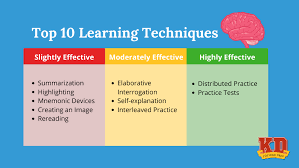
Many high school students reread textbooks or notes repeatedly, believing it helps them learn. Research shows this is one of the least effective methods.
Better approach
Active recall forces the brain to retrieve information.
Practical examples
- Close the book and write down what you remember
- Answer end-of-chapter questions without looking
- Use flashcards to test yourself
- Explain concepts out loud
Active recall improves memory and exam performance significantly.
3. Break Study Time into Short Sessions
Teenage brains struggle with long periods of concentration.
The ideal method
Use short study sessions with breaks in between.
Example:
- 25–30 minutes study
- 5 minutes break
- Repeat 3–4 times
This method keeps the mind fresh and reduces mental fatigue.
4. Study One Topic at a Time
Multitasking during study time lowers understanding and increases mistakes.
What to do instead
- Focus on one subject per session
- Complete one chapter or topic fully
- Avoid switching subjects every few minutes
Deep focus leads to stronger comprehension.
5. Use Spaced Repetition for Long-Term Memory
Spaced repetition means reviewing material over several days or weeks.
Why it works
High school exams often test material learned months earlier. Spaced repetition prevents forgetting.
Simple strategy
- Review new topics the next day
- Review again after one week
- Do a final review before exams
This method is especially helpful for science, history, and vocabulary.
6. Take Smart Notes in Class
Good study habits begin in the classroom.
Tips for effective note-taking
- Write key ideas, not full sentences
- Use headings and bullet points
- Highlight definitions and formulas
- Leave space for later revision
Notes should support understanding, not copy the textbook.
7. Practice with Past Questions and Tests
Understanding concepts is important, but applying them is essential.
How to practice effectively
- Solve textbook questions regularly
- Take practice quizzes
- Time yourself during practice
- Review mistakes carefully
Practice builds confidence and reduces exam anxiety.
8. Limit Phone and Social Media Use While Studying
Distractions are one of the biggest reasons students underperform.
Simple rules
- Keep your phone in another room
- Turn off notifications
- Use website blockers if needed
- Study at a clean desk
Even small distractions can break concentration for several minutes.
9. Use Visual Learning Techniques
Many high school students learn better visually.
Helpful tools
- Mind maps
- Diagrams and charts
- Color-coded notes
- Flashcards
Visual aids make complex topics easier to understand and remember.
10. Study Actively, Not Passively
Passive studying creates false confidence.
Active study methods
- Ask questions while studying
- Summarize lessons in your own words
- Teach the topic to someone else
- Create practice questions
If you can explain a topic clearly, you understand it well.
11. Balance School, Rest, and Activities
Overstudying can be as harmful as under-studying.
Healthy habits for students
- Get 7–9 hours of sleep
- Eat balanced meals
- Stay physically active
- Take short breaks during study sessions
A healthy body supports a focused mind.
12. Set Clear Academic Goals
Goals keep students motivated and focused.
Examples
- Improve math grade by one level
- Complete homework before dinner
- Review class notes daily
Break large goals into small, achievable steps.
Common Study Mistakes High School Students Should Avoid
- Studying only before exams
- Memorizing without understanding
- Ignoring weak subjects
- Studying with TV or music playing
- Skipping sleep to study
Avoiding these mistakes can improve grades without increasing study time.
Final Thoughts
High school success is not about being naturally smart. It is about developing effective study habits early. By using active recall, spaced repetition, focused study sessions, and healthy routines, high school students in the USA can improve grades, reduce stress, and prepare confidently for college.
Start with two or three techniques from this guide and apply them consistently. Small changes today can lead to major academic success tomorrow.
Leave a Reply